

Gerald Bennett et Pierre Boulez lors de la première conférence de presse de l’Ircam, 7 mars 1974, Théâtre de la Ville, Paris
© Martine Franck
Gerald Bennett is the 32nd person interviewed as part of the RAMHO project. This interview took place on November 22, 2023, at the composer's home in Muttenz in the canton of Basel. Born in New Jersey (United States) in 1942, composer Gerald Bennett studied music at Harvard University. After graduating in 1964, he continued his studies in Switzerland at the Basel Conservatory. He was appointed professor in 1967 and director two years later. Approached by Pierre Boulez in 1971 to take part in the development of IRCAM, he left his post in 1976 to head the institute's Diagonal department until 1980.
François-Xavier Féron
I understand that you attended Pierre Boulez's classes at Harvard between March and June 1963.
Gerald Bennett
Yes, that was during the second semester of the 1962–63 academic year.
François-Xavier Féron
Did you know who Pierre Boulez was?
Gerald Bennett
Not at all! I just knew that he had been invited to give the same series of lectures that [Igor] Stravinsky, among others, had given before him. But he also gave classes on the analysis of important 20th-century works; he discussed Webern, Stravinsky, Varèse... These were great discoveries for me. I was absolutely fascinated.
François-Xavier Féron
Apart from your brief experience with the Philips Pavilion [in 1958 during a trip to Europe], you weren't particularly knowledgeable about contemporary music?
Gerald Bennett
No, not at all.
François-Xavier Féron
Was it with Boulez that you made your debut in the world of contemporary music, or did your composition teacher, Robert Moevs, give you a leg up?
Gerald Bennett
Moevs had studied with Nadia Boulanger. He had spent many years in Paris and was published by Max Eschig. It was very, very contemporary music at the time. Surprisingly contemporary for an American because, at the time, there weren't many people writing like that. So I wasn't completely new to it, but my thoughts and ideas were really stuck in the past. The analysis classes were absolutely mind-blowing for me. Mind-blowing! But the event that affected me the most was the concert featuring Boulez's works.
François-Xavier Féron
What ensemble was capable of playing Boulez at that time?
Gerald Bennett
They were pickup musicians from New York who played well. You know, I wouldn't say I was skeptical, but as you can imagine, Boulez's analysis classes were really complex, and I was very sensitive to reality, to the acoustic rendering. I didn't know his music and I wanted to know if he was someone who could hear or not [laughter].
François-Xavier Féron
You discovered that he could hear well.
Gerald Bennett
Yes!
~
François-Xavier Féron
1964–65 was your first year in Basel. Did you know that Boulez would be back to teach summer classes in 1965?
Gerald Bennett
No.
François-Xavier Féron
You attended these summer courses as an auditor. According to the dates I found on your CV at the Sacher Foundation, they took place between June 21 and July 10, 1965. They were courses in contemporary music interpretation and conducting. Were there any composition classes?
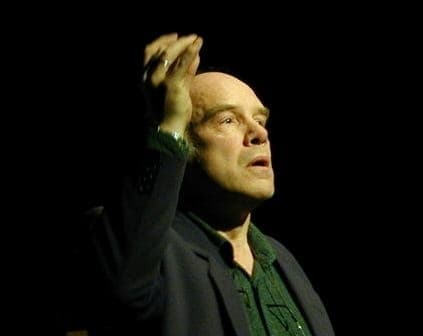 Gerald Bennett © DR
Gerald Bennett
No, not at all. It was amazing because we had the full Basel orchestra. Only Sacher could have pulled that off! For two weeks, we attended every rehearsal, morning and evening, for a total of six hours a day. In the afternoons, Boulez gave theory classes on the pieces that were being played or on music in general.
François-Xavier Féron
Did the students work with the orchestra?
Gerald Bennett
I didn't conduct the orchestra, but I worked on the scores before attending the rehearsals. It was during those two weeks that I really came into contact with contemporary music: six hours a day listening to the great scores of Berg, Webern, Varèse...
~
François-Xavier Féron
In letters written in June 1971, Boulez first mentioned an acoustic research center to you, and in October 1971, you met in Basel to discuss it. Do you remember what he said to you, how he brought you into the project?
Gerald Bennett
It was very understated and succinct. He asked me to participate in this new center in Paris.
François-Xavier Féron
An acoustic research center [CRA], as he called it at the beginning.
Gerald Bennett
Yes, but at the very beginning, it was just a question of a corner in the Pompidou Center where people could listen to recordings. A corner where you could learn a little about contemporary music.
François-Xavier Féron
Boulez never wanted that.
Gerald Bennett
No.
François-Xavier Féron
When he first presented the project to you, was that how he described it?
Gerald Bennett
He didn't talk to me about it much because he knew I would do everything [laughs]. He knew that all he had to do was ask me and I would be there.
François-Xavier Féron
You seem to be one of the very first people to have been approached by Boulez to develop this center, apart from Yves Galmot for administration and, very quickly, Nicholas Snowman and Brigitte Marger.
Gerald Bennett
Brigitte was in London.
François-Xavier Féron
Yes. Brigitte explained to me that he had told her about the project in London but hadn't asked her to take part.
Gerald Bennett
He didn't talk to me about it much, but I was very excited about the possibility of working with him, of being somewhere else. Politically, he knew what he wanted, but otherwise no one knew what we were going to do; we had no idea, including me. Jean-Claude [Risset] was the only one who could come up with ideas.
~
Gerald Bennett
When I arrived, there weren't many people there. There was Jean-Pierre Armand, Nicholas [Snowman], Brigitte [Marger], [Yves] Galmot, from time to time, but he didn't spend much time with us.
François-Xavier Féron
Jean-Claude [Risset] was there.
Gerald Bennett
Yes. He was upstairs, on the second floor [of a former public library], like me. You're asking me about things I've forgotten... It wasn't very practical; it was noisy and dusty.
François-Xavier Féron
The construction site was right below you. It must have been very noisy!
Gerald Bennett
It didn't bother me. I have to say, I don't remember any of that anymore.
François-Xavier Féron
The PDP-10 computer was installed in that library. Do you remember where it was located?
Gerald Bennett
That's a good question. No, I don't remember. I do remember the first sound we made with it. It was the sound of a cork [GB clicks his tongue to imitate the sound of a champagne cork].
François-Xavier Féron
Who programmed that sound? Jean-Claude?
Gerald Bennett
No. It was someone from Stanford, a programmer, maybe Brian Harvey. I don't remember exactly.
François-Xavier Féron
It must have taken several months before you could produce your first sound.
Gerald Bennett
It took almost a year, if I remember correctly, to get the digital-to-analog converters and be able to output sound from the computer. I thought I was there when the PDP-10 arrived, but apparently not, because in 1975 I wasn't living in Paris yet.
By François-Xavier Féron, CNRS researcher in the Analysis of Musical Practices team in the STMS laboratory (IRCAM, Sorbonne University, CNRS, Ministry of Culture)
Quote: Gerald Bennett – Interview with François-Xavier Féron, November 22, 2023, RAMHO project (Musical Research and Acoustics in France: An Oral History), STMS – IRCAM, unpublished.
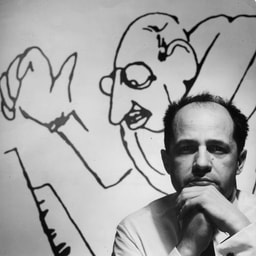
Pierre Boulez
Composer, conductor, founder of IRCAM
Related to this article
The RAMHO Project: Musical Research and Acoustics in France – An Oral History

Michel Decoust was the first person interviewed as part of the RAMHO project. This initial interview, conducted by Vincent Tiffon on February 25, 2019, at the composer's home in Buzet-sur-Tarn, was followed by a second interview conducted by François-Xavier Féron and Vincent Tiffon at IRCAM on November 22, 2021. At the request of Marcel Landowski, Michel Decoust established the Orchestre des Pays de la Loire between 1967 and 1970, before moving on to the Maison de la Culture in Rennes and the Maison de la Culture in Nevers. He later co-founded the Conservatoire de Pantin with Irène Jarsky and Martin Joste in 1972. In 1975, responding to a proposal from Pierre Boulez, he joined the team responsible for the prefiguration of IRCAM as head of the Pedagogy Department, a position he left in 1979 to join the Music Directorate of the Ministry of Culture.

Brigitte Marger-Mondoloni is the eighth person interviewed as part of the RAMHO project. Born in 1936, Brigitte Marger was an English teacher before taking up posts as a chargé de mission at the Directorate-General for Cultural Relations of the Ministry of Foreign Affairs and as cultural attaché to the French Embassy in Great Britain. She met Pierre Boulez in London in 1967 with whom she remained close. In 1973, she became involved in the IRCAM project as head of external relations. In 1982, she was appointed general administrator of the Ensemble intercontemporain. In 1993, she became the first Director General of the Cité de la musique, a position she held until her retirement in 2000.

fassey-600x331.jpg%3F2026-02-10T11%3A13%3A14.253Z&w=3840&q=90)

