

De gauche à droite : Jean Batigne, Pierre Boulez, Georges Van Gucht et Claude Ricou (trois des membres des Percussions de Strasbourg), juillet 1962
© DR
On 26 March 2025, we celebrate the centenary of the birth of composer and conductor Pierre Boulez. To mark the occasion, we present the key dates in the long career of the man who founded and directed IRCAM for 15 years.
1925
Birth of Pierre Boulez on March 26, 1925. From an early age, he took an interest in music.
1944
Boulez is admitted to Olivier Messiaen's harmony class at the Paris Conservatoire and wins his first prize in harmony the following year. From 1944 to 1948, he composed his first opuses, often for piano. These included Douze Notations, Trois Psalmodies and Première Sonate, followed by Sonatine for flute and piano and the first version of Visage nuptial for soprano, alto, and chamber orchestra, based on poems by René Char.

Douze notations (1945)
by Pierre Boulez, recorded in 1995
0:00 / 2:33
1946
Boulez is appointed stage music director for the Compagnie Renaud-Barrault and conducts scores by Georges Auric, Francis Poulenc, Arthur Honegger, as well as himself.
1947
At this time, Boulez opened up to the world and, through his travels, forged relationships with the leading figures of the musical avant-garde such as Luciano Berio, Luigi Nono, and Igor Stravinsky and also met artists such as Jackson Pollock and Willem de Kooning. These experiences were to have a major influence on his work.
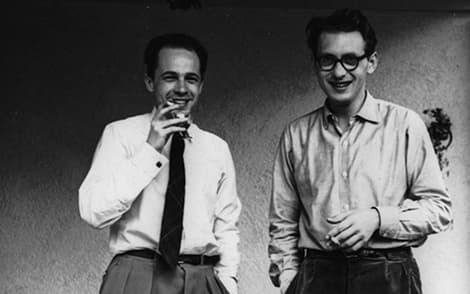 De gauche à droite : Pierre Boulez et Geza Anda, 1951 © DR
1951
Boulez conducts experiments in Pierre Schaeffer's musique concrète studios at Radio France, resulting in two musique concrète studies.
1952
In Structures I for two pianos, a radical work, Boulez applies the principle of ‘generalized serialism’.
1953
Anxious to ensure that modern music was heard and performed well, and to take a more professional approach to contemporary creation, Boulez and Jean-Louis Barrault organized the Concerts du Petit Marigny, which the following year took the name Domaine Musical. He would direct them until 1967.
1955
Le Marteau sans maître, for viola and six instruments, was premiered. For a long time, this work represented not only the composer's output, but also an entire era of contemporary European music.

Le Marteau sans maître (1954)
by Pierre Boulez, recorded in 1986
0:00 / 3:00
1960
In Pli selon pli, for soprano and orchestra, Boulez paid tribute to the poet Mallarmé. This work is considered to be the culmination and closing work of ‘the first Boulez', who up until 1960 revolutionized musical thinking, writing, and listening more than any composer of his generation. The 1960s saw the start of his international career, during which he conducted the greatest orchestras in Europe and the United States.
1963
His first publication was his monograph, Penser la musique aujourd'hui (Thinking about music today). At the same time, he gave numerous lectures at summer courses in Darmstadt, where, along with Karlheinz Stockhausen, Luciano Berio, György Ligeti, and Luigi Nono, he established himself as one of the leading figures of his generation.
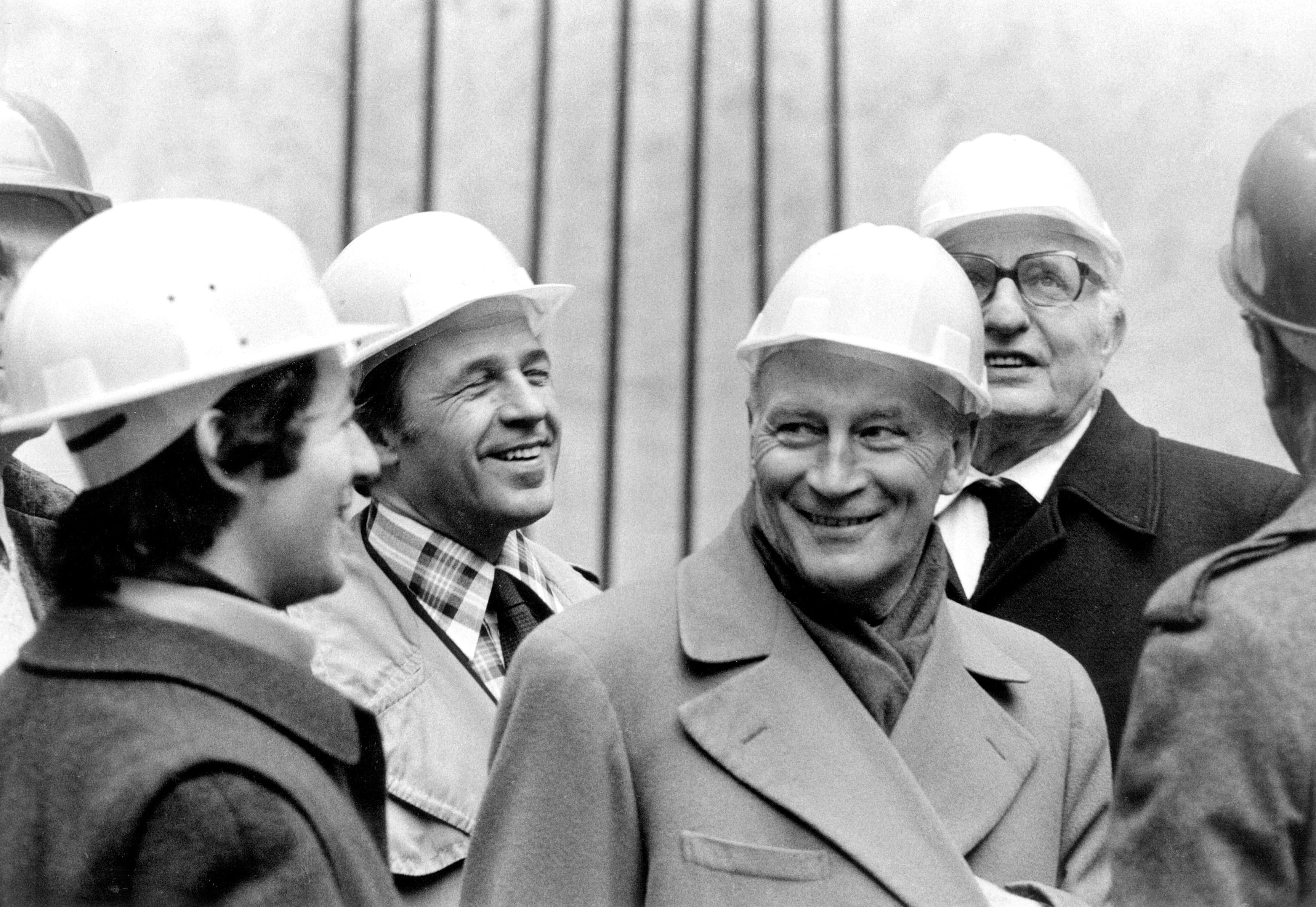 Pierre Boulez et Paul Sacher sur le chantier de l'Ircam, non daté © Marion Kalter
1966
André Malraux appoints Marcel Landowsky to head a Music Department. Boulez published an article entitled ‘Pourquoi je dis non à Malraux’ (Why I say no to Malraux) and decided to break away from official music bodies in France.
1969
He conducts the New York Philharmonic Orchestra for the first time, taking over from Leonard Bernstein as its conductor from 1971 to 1977. At the same time, he was appointed permanent conductor of the BBC Symphony Orchestra in London, a position he held from 1971 to 1975.
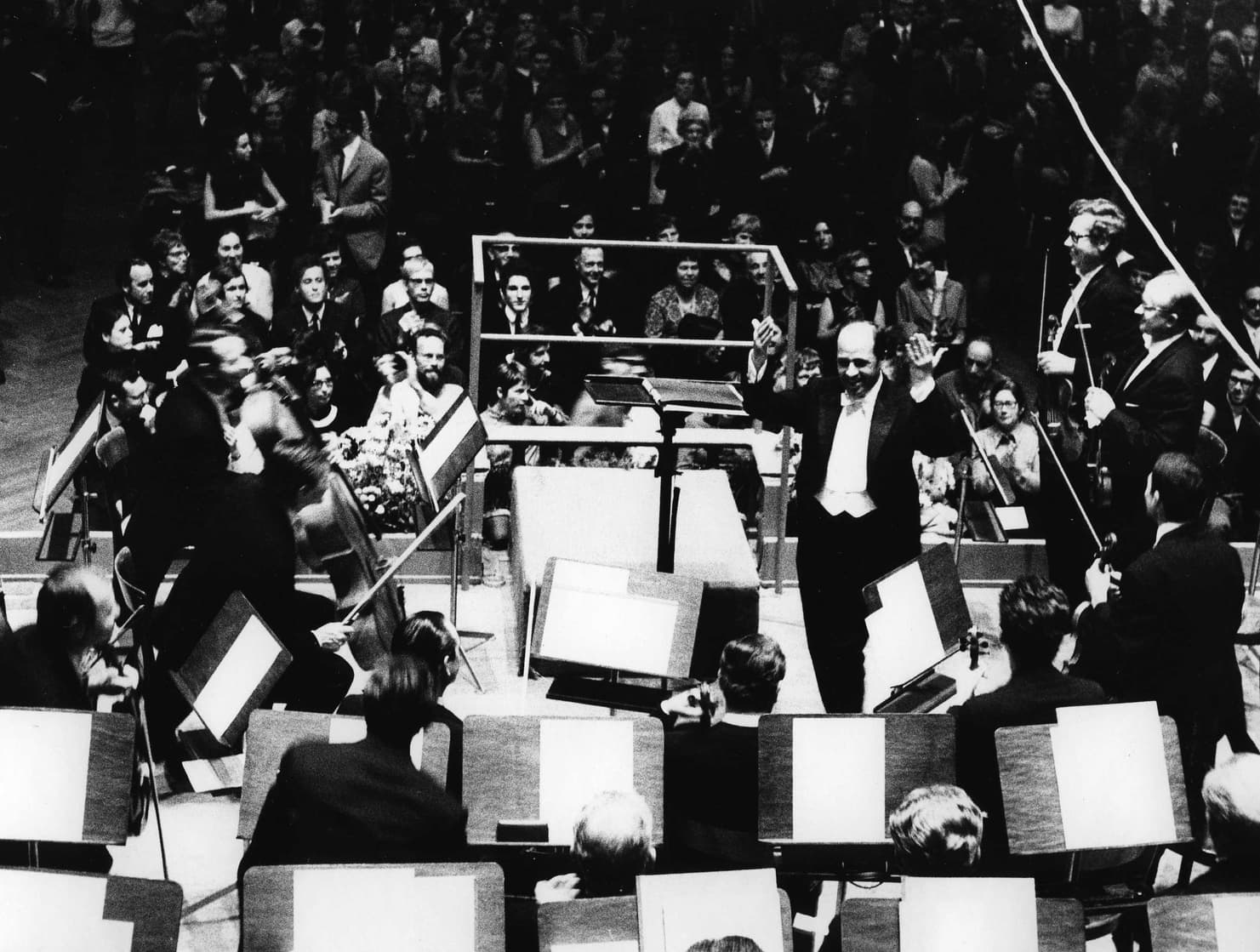 Pierre Boulez à Bâle 1969 © Esther Pfirter/Orkuss
1970
At the request of President Georges Pompidou, Boulez began thinking about a project for a music research center, which would be incorporated into the program for the Centre Beaubourg, and would be called IRCAM from 1972 onwards. Over the next few years, Boulez was to play a major role in the development of musical life in France by helping to found musical institutions at the crossroads of research, creation, cultural heritage, and transmission.
1975
Michel Guy, Secretary of State for Cultural Affairs, announced the creation of the nsemble intercontemporain (EIC), with Pierre Boulez as its president.
1976
Boulez began teaching at the Collège de France in the ‘Invention, Technique and Language in Music’ chair, which he held until 1995. Also in 1976, he was invited to Bayreuth to conduct Patrice Chéreau's production of Wagner's Ring, for the centennial celebration of the Ring cycle. He conducted this production for five years running.
1977
IRCAM organizes a series of musical events entitled ‘Passage du XXe siècle’ throughout the year, using its underground building located beneath what is now Place Stravinsky.
1980
Boulez premieres a symphonic version of four of his Notations for piano, a work he continues until 1999.
1981
Boulez premieres Répons, an iconic work at IRCAM based on the 4X machine, a real-time digital processor. In this work, which he developed and revised until 1984, the composer refers to the responsorial masterpieces by placing the instrumental ensemble at the center of the device, the six soloists around the periphery of the room, and the electronics throughout the space.
1986
The Ensemble Intercontemporain and IRCAM tour the United States.

Notations I-IV (1980)
by Pierre Boulez, recorded in 1995
0:00 / 2:41
1988
Boulez produces a series of six television programmes: ‘Boulez XXe siècle’. As part of the Avignon Festival, he conducts Répons at the Boulbon quarry. Guest composer at the Acanthes centre in Villeneuve-lès-Avignon, where he gives a series of conducting lessons.
1992
Laurent Bayle takes over as director of the IRCAM. Over the next few years, Boulez composed the last works in his catalogue, including …explosante-fixe…,Incises and Anthèmes 2, and signed an exclusive contract with Deutsche Grammophon. In August of the same year, the Salzburg Festival devotes an exhaustive program to him, consisting of concerts with the Ensemble intercontemporain and IRCAM, and with symphony orchestras.
1995
The Cité de la Musique is inaugurated by François Mitterrand, a project Boulez had been working towards since the early 1980s.

Anthèmes 2 (1997)
by Pierre Boulez, recorded in 2007
0:00 / 0:44
2000
Boulez wins a Grammy Award for Répons.
2004
Concerned about passing on his knowledge to the younger generation, he created the Lucerne Festival Academy, which welcomes one hundred and thirty musicians every year to perfect their interpretation of the music of our time.
2009
The Musée du Louvre devotes an exhibition to him, Pierre Boulez, œuvre: fragment.
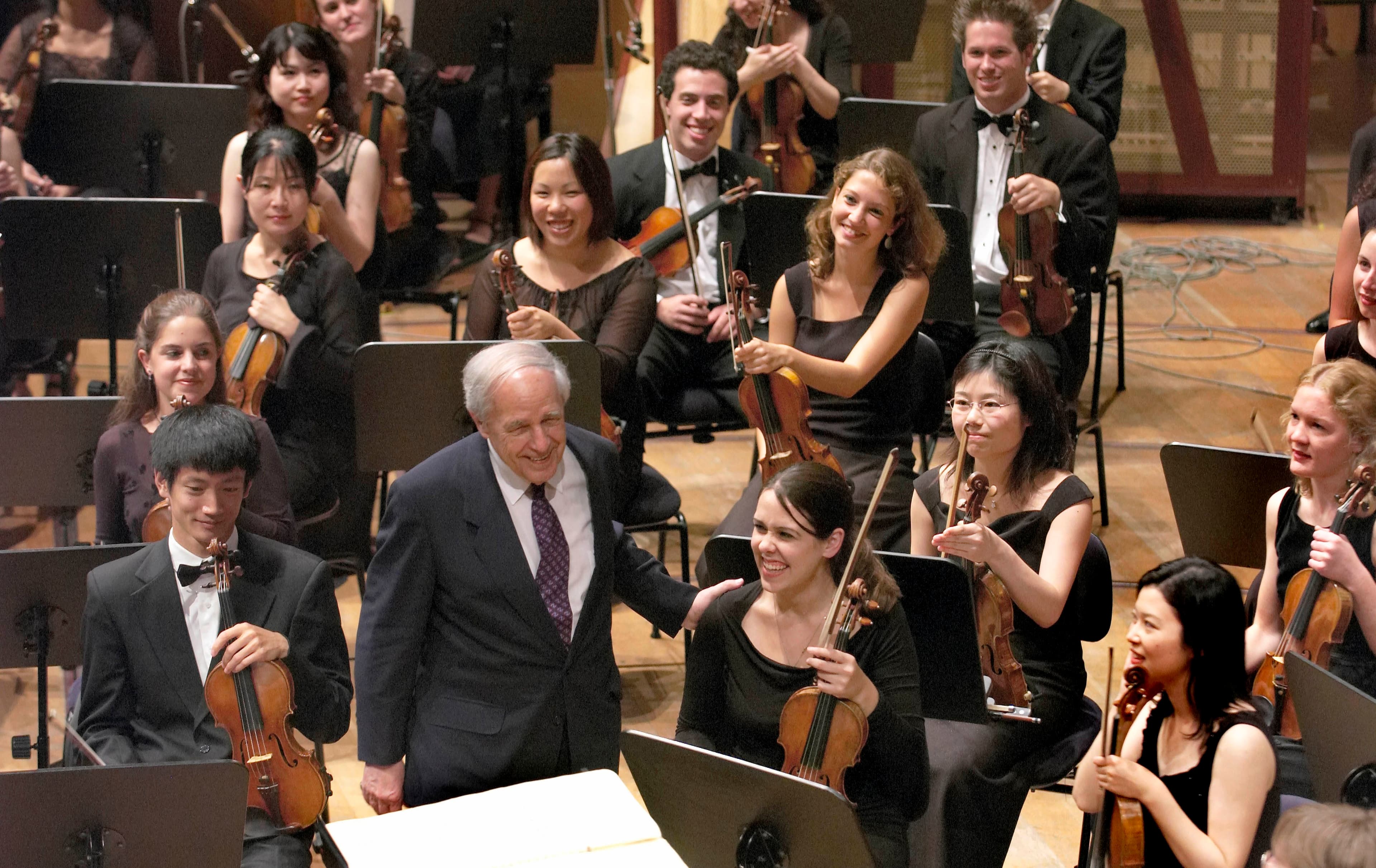 Pierre Boulez au Festival de Lucerne 2007 © DR
2011
Boulez embarks on a European tour with the musicians of the Lucerne Festival Academy and the Ensemble intercontemporain focusing on his work Pli selon pli.
2013
Deutsche Grammophon releases a 13-CD box set of the composer's complete works.
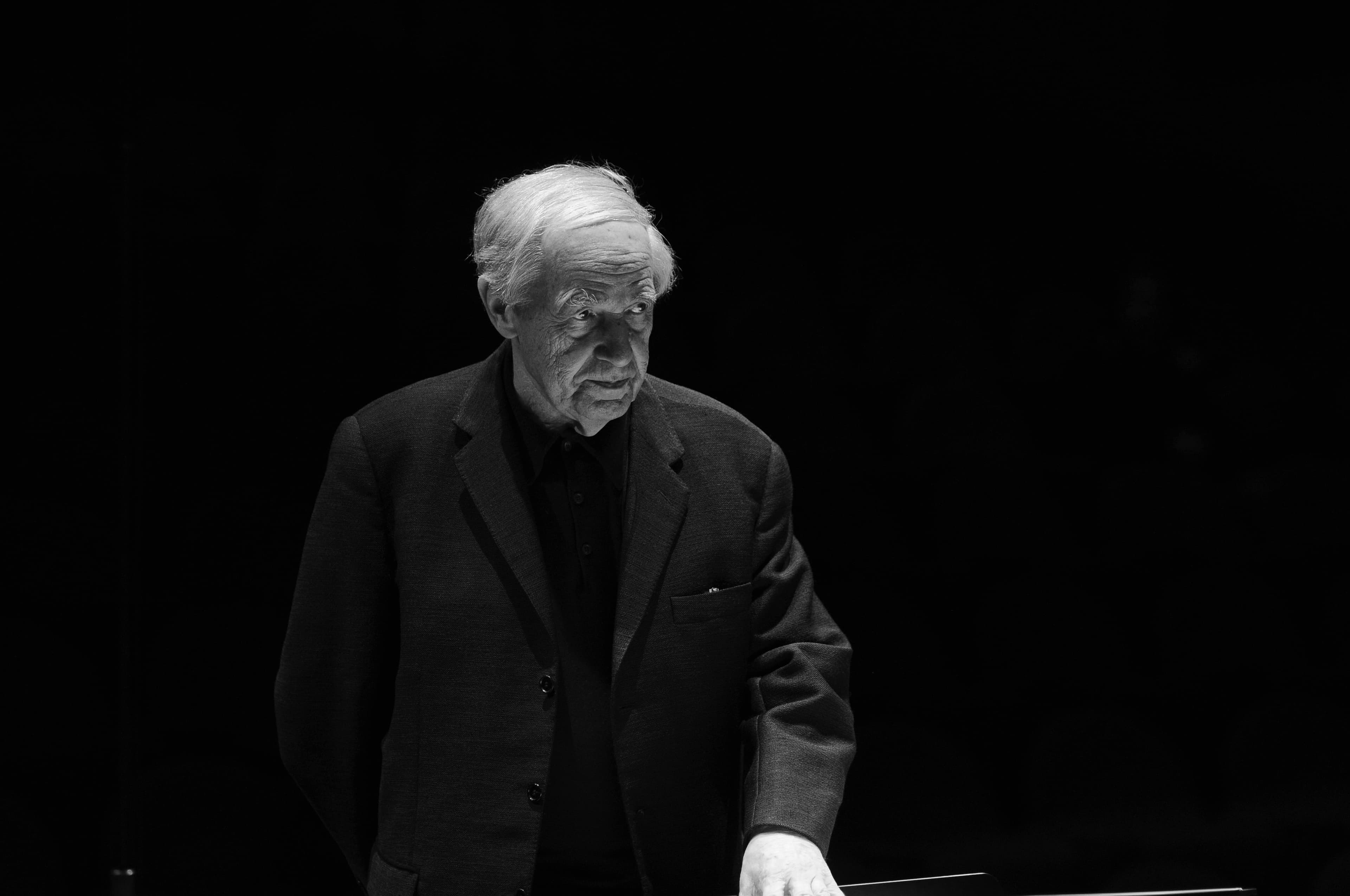 Pierre Boulez, 2007 © Jean Radel
Pierre Boulez
Composer, conductor, founder of IRCAM

fassey-600x331.jpg%3F2026-02-10T11%3A13%3A14.253Z&w=3840&q=90)
