

Concert Ensemble ULYSSES, avec l’Ensemble ULYSSES et l’Ensemble intercontemporain dirigés par Lin Liao, Festival ManiFeste-2023, au Centre Pompidou – Photo
© Quentin Chevrier
An interview with Frank Madlener and Gundega Šmite
Co-funded by the European Union, the ULYSSES Platform supports emerging contemporary music artists throughout Europe, by accelerating their visibility and professional competence. Starting in 2024, the Platform builds on three editions of the ULYSSES Network project, initially launched in 2012. Frank Madlener, director of IRCAM, and Gundega Šmite, composer and lecturer at the Jāzeps Vītols Latvian Academy of Music – both project members – share their views on the Platform and on its role in supporting the new generation of artists in a highly competitive economic and cultural context.
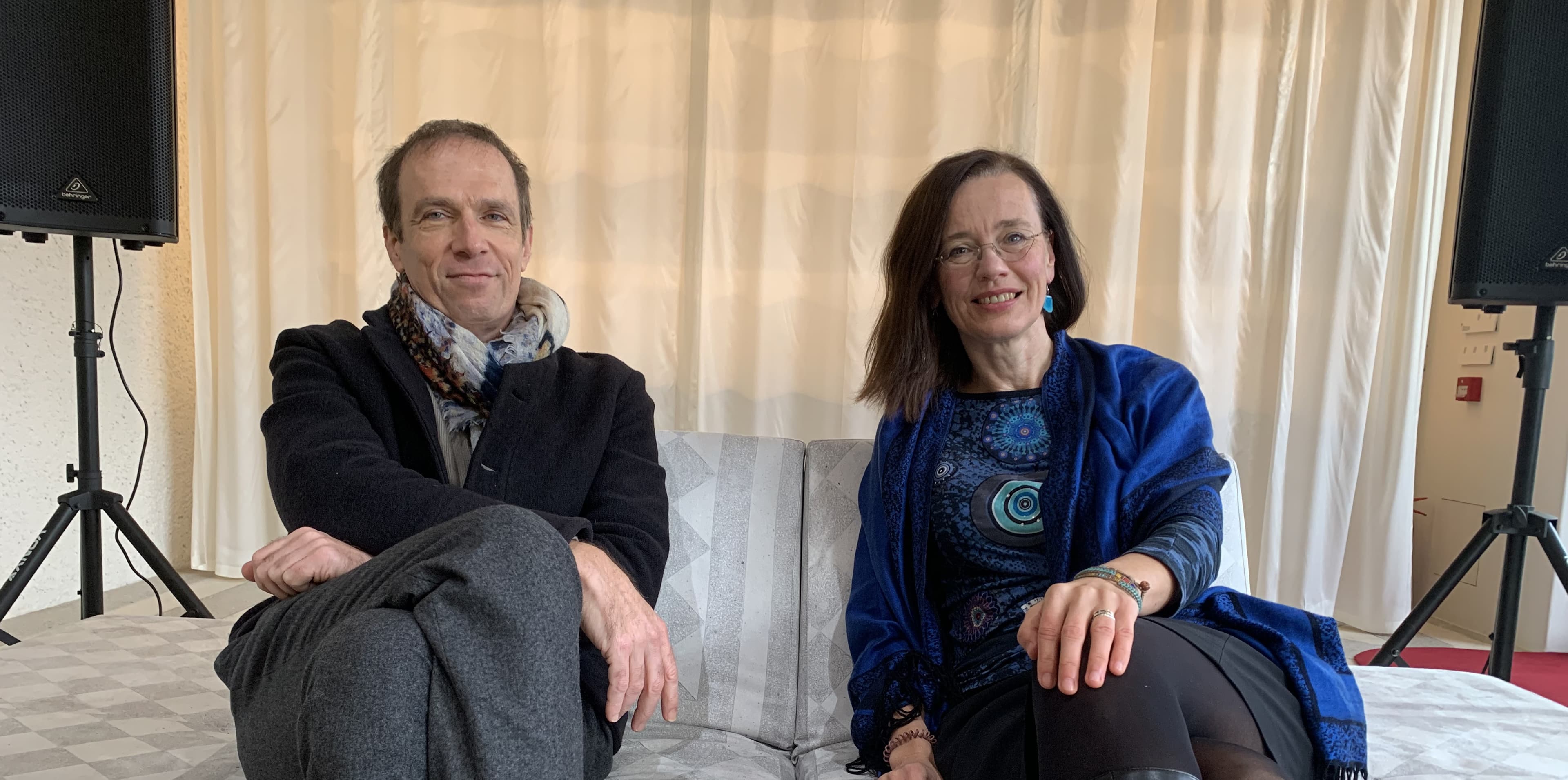 Frank Madlener et Gundega Šmite
What’s new about the ULYSSES Platform as compared to the ULYSSES Network, and what insights do you draw from the previous editions?
Frank Madlener
With the ULYSSES Platform, the network is expanding. We are reaching new partners but also a wider range of artists who can benefit from its support. This growth allows us to develop more projects, which is essential to ensure more diversity and representation. We are now able to dive into deeper, more meaningful conversations between partners, about subjects such as curation and trends – in music but in other artistic fields as well. Comparing our experience helps us to look at things from a broader perspective. Regarding the projects, we continue to develop the ULYSSES Ensemble project, where we select young musicians from across Europe to form a group which then tours for one season through the continent, allowing them to work with different composers and perform alongside members from renowned professional ensembles. We also help to promote emerging ensembles with the ULYSSES Emerging Ensembles project, and are eager to pursue the “In-Situ” projects, which situate the concert performance in relation to a place, to an audience or to another art form. I believe this is an essential approach: it pushes artists out of their comfort zone and always produces interesting results.
Gundega Šmite
What’s also new are the listening sessions, where Platform members present the work of the most talented emerging composers and performers from their countries. It’s an opportunity for us members to discover artists from other parts of Europe, and often beyond. We take the time to share our views and perspectives about emerging artists, composers, and ensembles.
Jāzeps Vītols Latvian Academy of Music’s Decibels festival, and IRCAM’s ManiFeste festival started, respectively, 12 and 14 years ago. What changes you have observed among young composers over the years and what emerging trends do you observe in European musical creation?
Frank Madlener
It’s always interesting to see that, while we are from different European countries, we observe the same evolutions in the new generation of artists, but also more generally, in the state of the arts, technological advances and cultural changes as well. Overall, music is becoming more interconnected with other artistic practices, such as the performing or visual arts. Among creators, there is a growing interest in field recordings – for instance, in capturing environmental changes and their impact on nature. There is also a focus on autofiction, with works that are more retrospective. Technology, of course, occupies a central place in recent works, which convey either the artist’s appreciation of it, or on the contrary, a more nostalgic, even technophobic, point of view. They may share a common topic, but the attitudes and approaches they adopt can be quite different. At the same time, I am sensing a growing pessimism in many works produced by young artists. The listening sessions are a great opportunity to identify these trends. I see ULYSSES Platform as a sort of “compass”, a guide for all stakeholders in European contemporary music.
Gundega Šmite
The Soviet occupation of Baltic countries until the 1990s still has its consequences today, especially on art. Because avant-garde music developed so many years after the rest of Europe, many young composers are still reluctant to try their hand at making electronic music. On the upside, I see a growing number of composers bravely embracing new trends, trying different art forms, blurring boundaries by combining different media, including lights, video, or performative elements such as theatre or dancing.
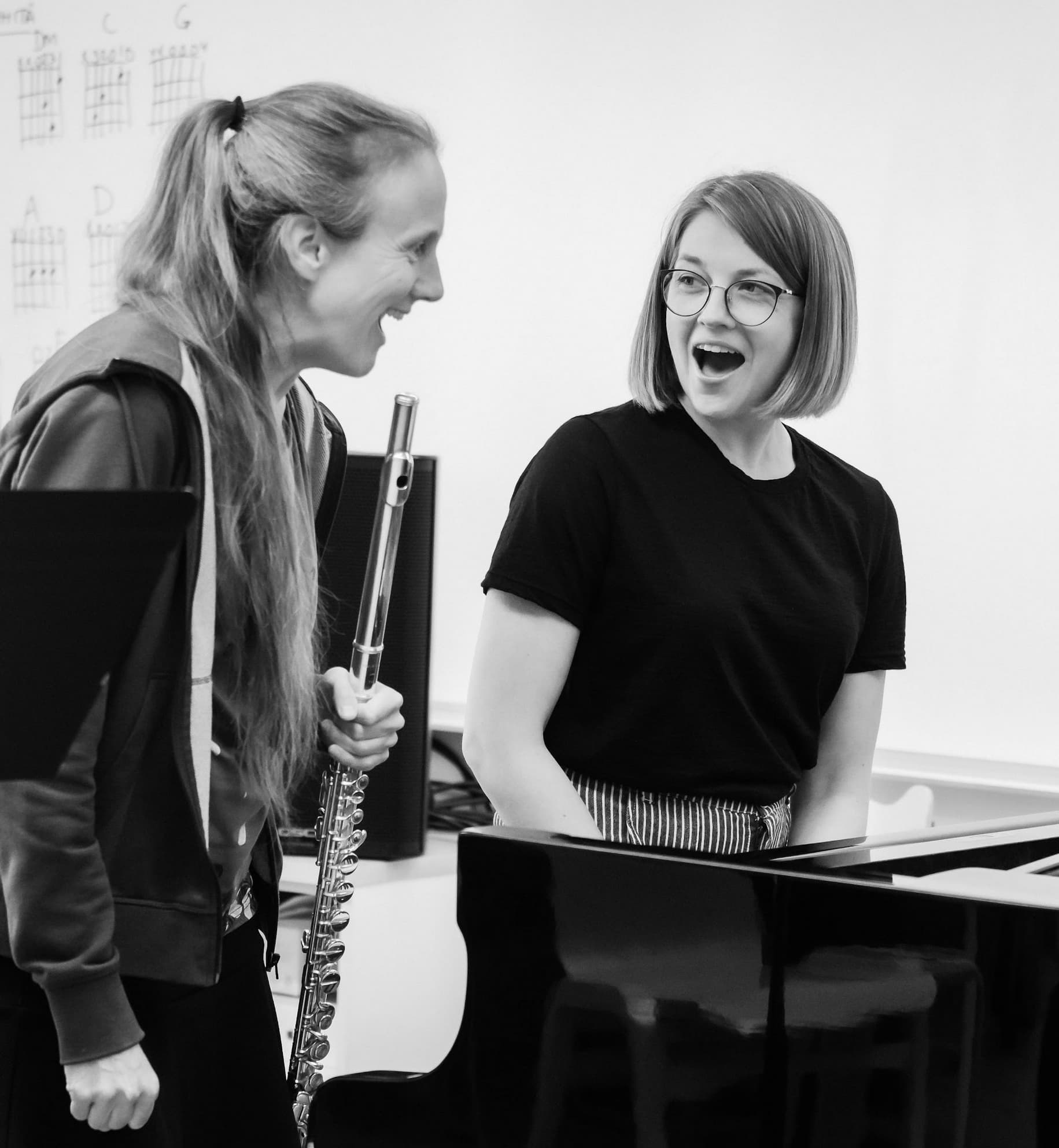 Cours de composition de Jesper Nordin, Time of Music Festival, Finlande 2024 - Photo © Anna Kemppainen
In recent years, the work of composers seems to have extended beyond the written score. The hierarchy between composer and performer is gradually dissolving; performers are now getting more involved in the creative process – sometimes even at the stage of composition. All parties are interacting more, and that is also true for the audience. Interaction is becoming more prominent in art; audiences are getting increasingly engaged, willing to get involved in the performance and become part of the process. Some performances even give them the opportunity to walk around in the concert venue, or to vote on their phone for what should happen next. As we move away from purely academic art, it raises the question: what is the future of composition? Considering all this, the support that the ULYSSES Platform can provide to this new generation of artists is essential, particularly thanks to its network of qualified specialists, who can guide and advise them.
Would you say that the recent developments in the music industry, as well as the general state of the world, have an impact on young artists?
Gundega Šmite
I think we are all affected by these changes, and artistic creation is no different. When considering the flood of information, the growing political tensions, the latest technological developments – it can all be quite overwhelming! I like this metaphor of the “compass”, which clearly illustrates how the ULYSSES Platform provides orientation to young artists, who come from all around the world and have drastically different cultures and backgrounds. In these difficult times, I think that mission is more important than ever.
Frank Madlener
Young artists can sometimes feel isolated, particularly when they are outside of mainstream music production. The ULYSSES Platform can help them find a mirror in someone else who shares their views, by bringing together budding talents and fostering the creation of artistic alliances around the world. We also encourage artists to take the time to develop a project and focus more on quality than quantity.
What challenges do young composers face today?
Gundega Šmite
Promoting your work can represent a big challenge for young artists. Unrelated to how talented they might be, they don’t necessarily have the confidence, the tools and the know-how to do so. This constitutes a major issue in an industry that is very competitive. To address this problem, some schools and universities such as Yale, have opened courses dedicated to teaching composers to efficiently showcase their work. This is an initiative that the ULYSSES Platform wholly supports and strives to follow, by organising seminars and workshops such as the ULYSSES Online Sessions, which focus on topics such as curation and self-promotion and invite speakers to share their knowledge and personal experience. But it is a difficult mission, because there are just too many composers for us to be able to offer them all a co-commission.
Frank Madlener
The lack of recognition by major institutions is also an issue: young composers, artists and ensembles should be much more featured in the line-up of their artistic season and festivals. Contemporary music is also a victim of the “echo chamber” phenomena, meaning that everything happens within a close-knit circle, which contributes to the artists’ isolation. Competition constitutes an additional threat. In their pursuit of perfection, some young artists are seeking to achieve a sort of “Gesamtkunstwerk”1 – trying to master all techniques and practices. I believe, on the contrary, that it is better to delegate, to connect with other people who are specialised in different practices and build something together. This can also help attract audiences from separate fields and therefore facilitate the recognition of artists.
 Concert Ensemble ULYSSES, avec l’Ensemble ULYSSES et l’Ensemble intercontemporain dirigés par Pierre Bleuse, Festival ManiFeste-2024, au Centre Pompidou – Photo © Quentin Chevrier
Do you think the growing geopolitical tensions that threaten European unity might have an impact on ULYSSES Platform and its members? How do we maintain these relations?
Gundega Šmite
What might suffer first from rising political tensions is funding – if governments decide, for instance, to impose restrictions on culture in favour of defence. Maintaining a form of unity between European countries can be done through collaborative artistic work that addresses political or societal issues, which can play a major role in raising awareness. Another way we can support other countries is by promoting their artists during the listening sessions – I am thinking of a Ukrainian partner, who has not yet been able to attend our meetings in person, due to the current circumstances.
Frank Madlener
Knowing how to distance ourselves from the global context is also sometimes necessary. We should not expect artists to address these current issues, even when they directly concern them; that would mean binding their creative freedom. Just because we make documentaries doesn’t mean we should stop making fiction films! The answer that we propose with the ULYSSES Platform is to create collaborations across countries, through co-commissions, promotion and touring, to support artists that we believe in.
What specific projects would you like to develop in your work as members of the ULYSSES Platform?
Gundega Šmite
This year, I am looking forward to working on new co-commissions with young composers, as well as inviting emerging ensembles to showcase their work. We have much to gain from working with these new talents who are very skilled and have an innovative approach to music. I really like attending events organised by other members, to discover new artists but also to discuss and start new collaborations. As a school, the Latvian Academy of Music has really benefited from the ULYSSES network; many new students in fact attended IRCAM’s ManiFeste Festival Academy before joining us, which is how they were introduced to other members of the ULYSSES Platform.
Frank Madlener
Connecting with the other partners to share our best practices is crucial. We could even positively influence music education more broadly by documenting our production processes and sharing them with music schools and conservatories. In this way, our approach and processes would become the norm instead of the exception. We could also imagine including in this report how other cultural institutions approach their own disciplines and how they relate to music.
Gundega Šmite
It would be worthwhile to developing cultural mediation projects or educational programs targeted to an even younger public, in which artists would visit schools to educate the youth about contemporary music. Finding a way to engage a new audience who is not familiar with this genre and what we do.
Can you tell us more about the “In-Situ” projects that you mentioned before?
Gundega Šmite
At the Latvian Academy of Music, we are still in the process of defining our ULYSSES projects. This year, our “In-Situ” project will be conducted locally, involving a string quartet and electronics performing in a marketplace, to deal with the question of ecology. The second project is still a work-in-progress, as we would like to develop it in collaboration with other members of the Platform.
Frank Madlener
At IRCAM, we are developing projects all around France involving electro-acoustics to completely change the sound perception of the space where they will be performed. There is still a lot to explore in music in terms of artistic intent, duration, form… We should encourage the production of works that are more diverse, that go beyond the conventional 15-20-minute format. It is important that we continue to offer something new to the audience, that we keep surprising them.
Interview conducted by Anne Appathurai, ULYSSES Platform Project Manager
1. The “Gesamtkunstwerk” or “total work of art” is a German aesthetic concept introduced in 19th century Europe during the romantic period. It refers to an ideal synthesis of all art forms that could reflect the perfect harmony of life.


![Concert interactif, avec l’Ensemble ]h[iatus sur des pièces composées par Sébastien Roux et Clément Canonne, Espace de projection, Ircam, 2026 - Photo](/_next/image?url=https%3A%2F%2Fwww.ircam.fr%2Fapi%2Fmedia%2Ffile%2FConcert-participatif-hiatus-600x400.jpg%3F2026-06-02T10%3A35%3A17.647Z&w=3840&q=90)